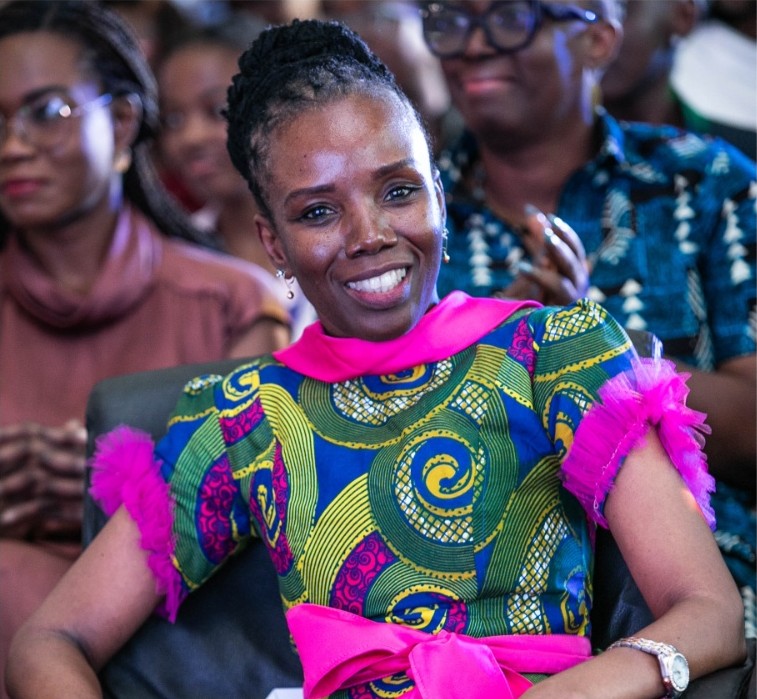
Professor Elsie Effah Kaufmann, Dean of the School of Engineering Sciences at the University of Ghana, has urged institutions to design structured mentorship frameworks that are growth and results-driven.
during a virtual presentation
Delivering an address on building sustainable leadership in technology at the fourth edition of the Females in Tech (FEMITECH) conference, Prof. Kaufmann stated that many organizations recognize the value of mentorship but fail to implement systems that allow it to grow and endure.
She emphasized that mentorship must be treated as a strategic leadership pipeline rather than an informal or voluntary activity.
“If we want these stories to become the norm, we must design for sustainability. We must institutionalize mentorship,” she said.
According to Prof. Kaufmann, goodwill alone cannot sustain mentorship programs across organizations or industries; instead, institutions such as universities, companies, research laboratories and innovation hubs must establish formal mentorship structures with clearly defined goals, matching processes and measurable outcomes.
“Goodwill alone will not help us. Goodwill won’t scale on its own. We need to formalize programs with clear objectives, matching processes and outcomes,” she explained.
She noted that mentorship initiatives should receive the same level of planning and accountability as other leadership development programs. This includes budgeting for mentorship initiatives, tracking progress, and evaluating their long-term impact on career development.
“We must treat mentorship like any core leadership pipeline. We have to budget for it, measure it, and report on it,” she added.
Beyond formal structures, Prof. Kaufmann highlighted the need to properly train mentors as well, since many professionals assume that experienced engineers or senior professionals automatically make good mentors. She cautioned that technical expertise alone does not necessarily translate into effective guidance.
“The fact that someone is a great engineer does not necessarily make them a great mentor. We have to offer training in coaching skills, inclusive leadership, bias interruption, feedback delivery, and career navigation. Mentors must be equipped to guide, not just give advice,” she said.
She also encouraged organizations to develop mentorship ecosystems that operate at multiple career levels.
“Mentorship is not something we leave to happen naturally. It must be designed, supported and sustained if we want to build leaders who will shape the future of technology,” she noted.
Prof. Kaufmann further disclosed that digital platforms can play a significant role in expanding mentorship opportunities.
“Virtual mentorship programs can connect mentors and mentees across regions and industries, helping individuals gain access to guidance even in environments where local role models may be limited. By combining structured programs, mentor training and digital platforms, institutions can build mentorship systems capable of supporting future technology leaders,” she said.
Professor Elsie Effah Kaufmann, finally stressed that sustainable leadership in technology depends on the ability of organizations to intentionally develop talent rather than relying on chance.
The event brought together several distinguished speakers, including: Ing. Dr. Lucy Agyepong, Vice President of Institutional Advancement at Academic City University College; Mrs. Etta Mosore, Deputy Director General, Managerial Operations – National Communications Authority (NCA); Jada Badu, CEO, Uber Ghana; Ms. Margaret Ansei, CEO, Ghana Enterprise Agency; Winifred Kotin, Eagle Innovations
This year’s FEMITECH Conference, marking its fourth edition, was simultaneously held in Bolgatanga, Upper Region; Nkwanta South, Oti Region, and Sunyani, Bono Region.